

There’s a question I find myself asking whenever I look at a pre-sessional programme for the first time: who, exactly, is this designed for?
Because in my experience, the honest answer is often: generic international students don’t really exist!
It’s important to keep in mind that our international students from different countries bring a whole raft of different academic traditions, different relationships with authority in the classroom. A student from China may have spent years in a highly structured, teacher-led learning environment. A student from Nigeria may be arriving with strong oral argumentation skills but less experience of the kind of written academic register UK universities expect. A student from Germany may already have significant research experience but struggle with the informality of British seminar culture. These are not the same student. They do not have the same needs.
And yet many pre-sessional programmes are built around a single model — the same reading texts, the same writing tasks, the same listening exercises — delivered to everyone regardless of background, prior education, or the specific academic context they’re about to enter.
The problem with one-size-fits-all
If we design for an average student, we often serve no student particularly well. The student who already has strong academic writing skills sits through sessions that feel remedial. The student who needs more scaffolding around seminar participation doesn’t get it, because the programme wasn’t built with that in mind. And the student who arrives having never been asked to challenge a lecturer’s argument — a completely normal expectation in British higher education — finds themselves in an environment that feels bewildering, with no real preparation for why.
This isn’t a failure of effort. Most pre-sessional teams work incredibly hard. It’s not even a failure of design…. it’s a need for more design thought…
What a more responsive approach looks like
It doesn’t have to mean building ten different programmes. It means asking better questions before you build.
One of the most valuable — and most overlooked — parts of this process is working directly with academic departments throughout the design of the programme. The way a student in Engineering needs to write is not the same as a student in Law, or Social Sciences, or Medicine. Each discipline has its own genre conventions, its own relationship with evidence, its own expectations around argument and structure. And they will have a whole reading list to share too!
A pre-sessional programme planner who hasn’t had those conversations with the departments it feeds into is essentially guessing. And students pay the price for that guess in their first term.
Beyond that, it means asking:
- Where are your students coming from, and what do we know about the pedagogical traditions they’ve experienced?
- What specific classroom skills — not just language skills — will they need in their first term?
- Are you designing for who you think they are, or who they actually are?
A well-designed needs analysis at the start of programme development changes everything. It’s the difference between a programme that feels relevant and one that feels like a box being ticked.
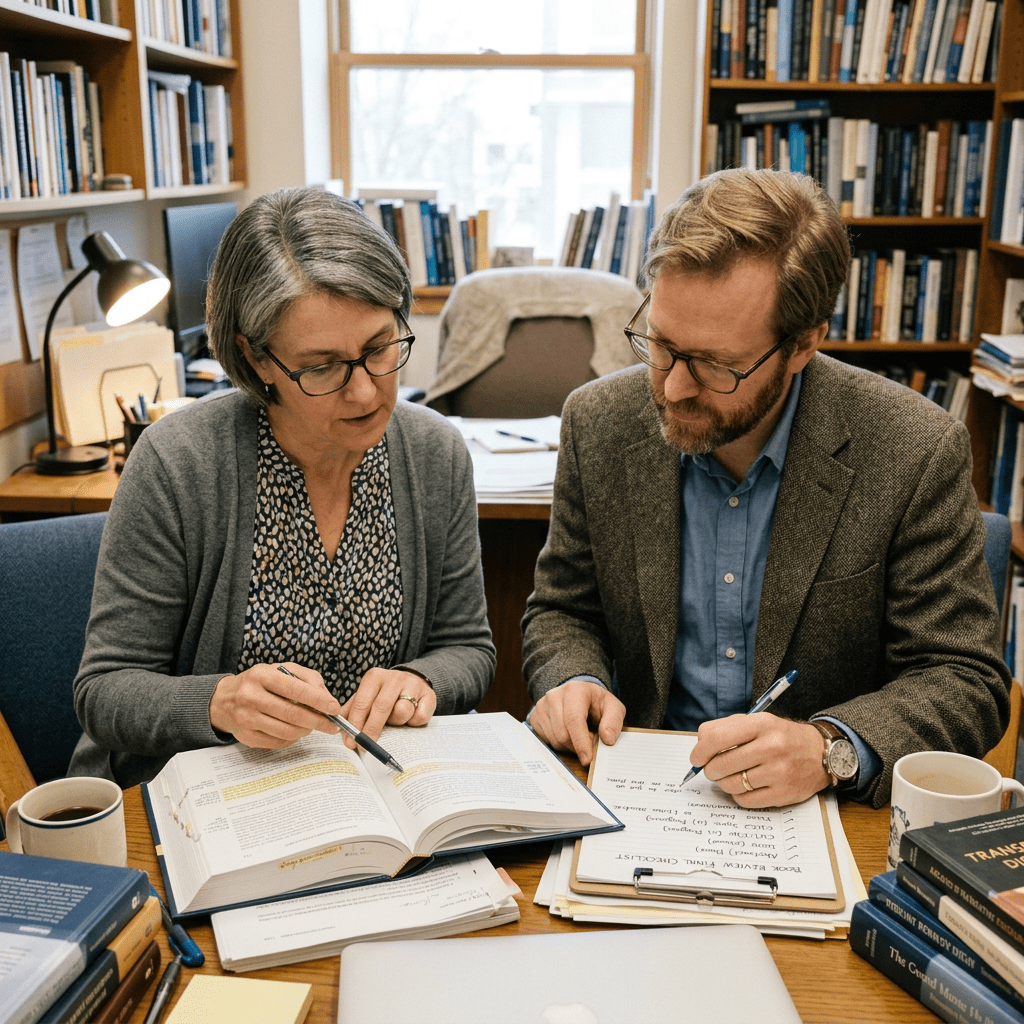
If you’re not sure whether your current programme is asking the right questions about your students, that’s a good place to start a conversation.
And if you’d like to talk about what questions you need to ask in your own particular context, then let’s have a chat soon!
[Get in touch →]Home
Penny Mosavian is an Associate Professor, Senior Tutor & Course Director at Warwick Global Academy, University of Warwick, and an independent consultant specialising in academic programme design, curriculum development, academic English, teacher training & development and educational technology.


Leave a comment